2026 Best Cable Testing Equipment Guide for Professionals and Enthusiasts
In the fast-evolving landscape of telecommunications, the demand for reliable Cable Testing Equipment has surged. A report from MarketsandMarkets indicates the global market for cable testing equipment is projected to reach $2.13 billion by 2026. This growth reflects the increasing importance of ensuring efficient and safe wiring in various industries, from telecommunications to manufacturing.
Professionals seek advanced tools to improve accuracy and reduce downtime. In an industry where precision is paramount, outdated equipment can lead to failures and costly delays. Whether you are an electrical engineer or an IT technician, understanding the nuances of cable testing is critical. A quality cable tester ensures compliance with standards and enhances overall system performance.
However, choosing the right equipment can be daunting. The variety of tools available can overwhelm even seasoned professionals. Inadequate knowledge may result in selecting less effective options. It's vital to critically assess your specific requirements, rather than following trends blindly. Knowing the features of the best cable testing equipment can make a significant difference in outcomes.

Overview of Cable Testing Equipment: Importance and Applications
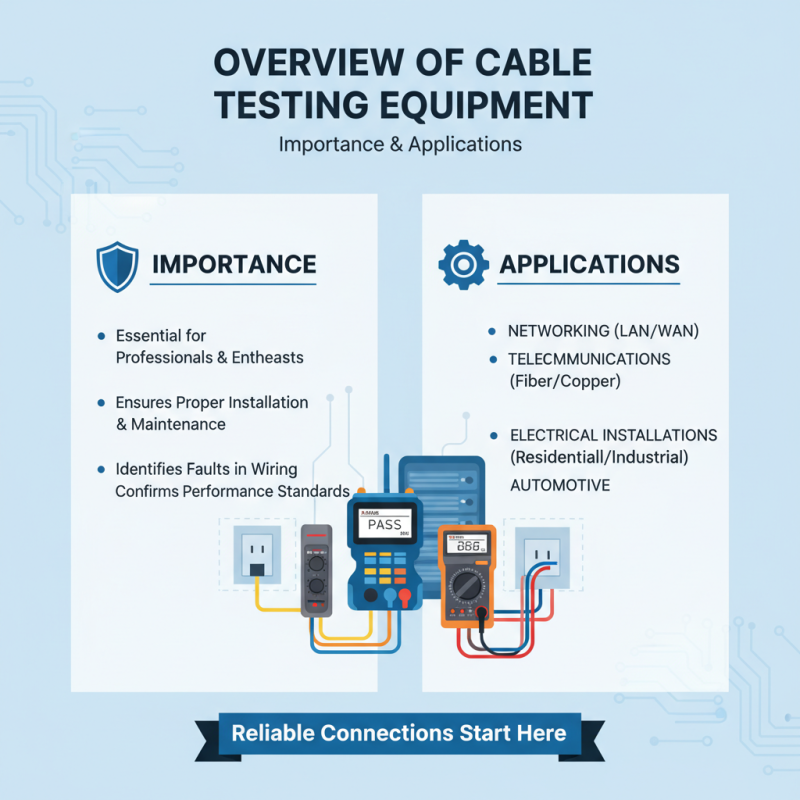
Cable testing equipment is essential for both professionals and enthusiasts in the field. Understanding the importance of this equipment is crucial for ensuring proper installation and maintenance. These tools help identify faults in wiring and confirm performance standards. They play a vital role in various applications, such as networking, telecommunications, and electrical installations.
When using cable testing equipment, the user must be knowledgeable about different testing methods. Common methods include continuity testing, signal testing, and certification testing. Each method serves a distinct purpose. For example, continuity testing checks if a cable has a complete circuit. Signal testing, on the other hand, measures the integrity of data transmission. The reliability of results largely depends on the user’s familiarity with the equipment and procedures.
Practitioners sometimes face challenges with calibration and troubleshooting. It's not uncommon to encounter issues that require thoughtful reflection. Misinterpretation of test results can lead to unnecessary repairs. Furthermore, improper usage of equipment may yield inaccurate readings. Continuous learning and hands-on experience are key to mastering cable testing for effective outcomes.
Types of Cable Testing Equipment: A Comprehensive Breakdown
Cable testing equipment plays a vital role in ensuring network reliability. Understanding the various types available can help professionals and enthusiasts make informed choices. There are primarily three categories: continuity testers, cable certifiers, and network analyzers.
Continuity testers are the simplest tools for checking if cables are working. They detect breaks or shorts within the wire. Their affordability makes them accessible, yet their depth of testing is limited.
Cable certifiers offer advanced functionality. They assess whether cables meet specific industry standards. This is crucial for installations that require high performance. However, they can be expensive. Balancing budget and needs is essential when considering one.
Network analyzers provide detailed insights into signal quality and performance. They identify issues like crosstalk or interference. These devices are necessary for troubleshooting complex setups. However, using them effectively requires knowledge and experience.
Tips: Regularly calibrate your equipment for accurate results. Keep your testing environment controlled. Avoid testing in extreme conditions, as it can skew your findings. Always consult the user manual for proper usage.
Key Features to Consider When Choosing Cable Testing Gear
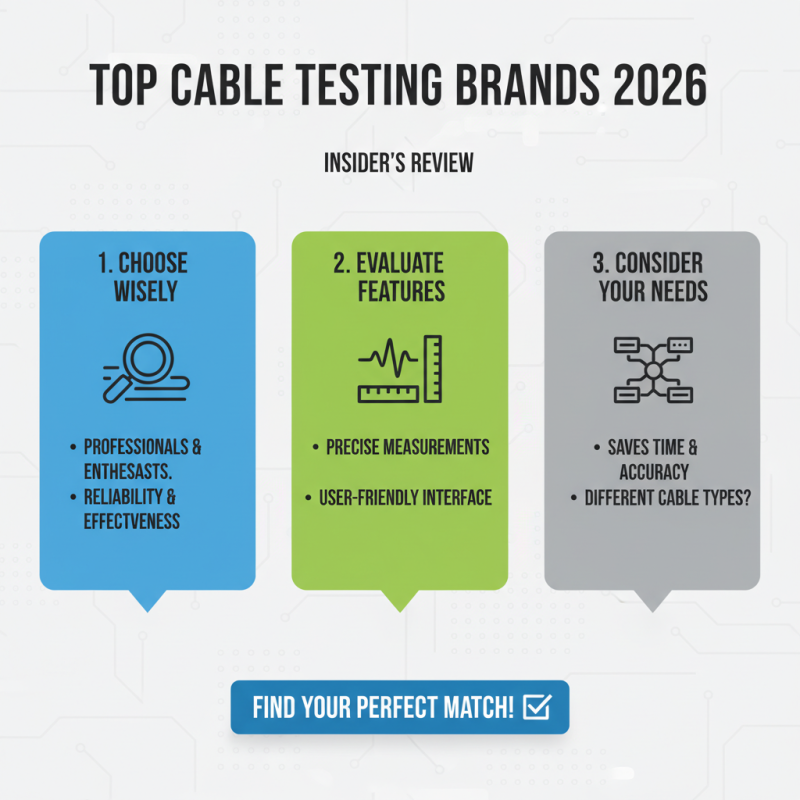
Selecting the right cable testing equipment is crucial for professionals and enthusiasts alike. When looking for gear, prioritize accuracy. A reliable device ensures precise measurements and helps identify issues swiftly. Calibration is essential. Regularly test and certify your equipment to maintain its integrity. This prevents future mishaps.
Consider the range of test parameters. Equipment that measures continuity, resistance, and signal integrity is often more useful. Multi-functional devices can save time and space. However, they can be overwhelming. Specialists may feel lost in the variety of features. Read the manual thoroughly to grasp its capabilities.
Ease of use is vital. Devices should be intuitive, even for newcomers. A complicated interface can lead to errors. Training on the equipment may be necessary. Think about portability too. Lightweight tools make fieldwork easier. Yet, striking a balance with durability is important. Tools should withstand demanding environments without breaking down.
2026 Best Cable Testing Equipment Guide for Professionals and Enthusiasts
| Model |
Key Features |
Testing Capabilities |
Range |
Price |
| Model A |
Auto Calibration, Digital Display, Lightweight |
Cable Resistance, Capacitance, Length Measurement |
1m - 1000m |
$250 |
| Model B |
Compact Size, USB Connectivity, High Accuracy |
Wiremap, Signal Quality, PoE Testing |
Up to 500m |
$399 |
| Model C |
Multi-Protocol Support, Touchscreen Interface |
Insulation Resistance, Continuity Testing, Cable Fault Location |
1m - 2000m |
$650 |
| Model D |
Rugged Design, Long Battery Life, Wide Temperature Range |
Cat6/Cat6A Testing, Pair Quality |
1m - 1500m |
$850 |
| Model E |
Cloud Connectivity, Automatic Reporting |
Network Speed, Latency Testing |
1m - 3000m |
$1200 |
Tips for Proper Use and Maintenance of Cable Testing Equipment
When using cable testing equipment, proper handling is crucial for accurate results. Always calibrate your device before testing. This ensures precision and reliability in measurements. Regular calibration prevents errors in identifying faulty cables. Familiarize yourself with device settings, as each model may vary. Incorrect settings can lead to misleading outcomes.
Maintenance plays an equally important role. Clean the connectors and probes regularly to avoid dust build-up. Residue can affect signal quality and lead to false readings. Store equipment in a dry, safe place to prevent damage. A well-maintained device lasts longer and performs better.
Reflect on your testing habits. Are you rushing through tests? Taking time to perform assessments can save you from future headaches. Continual learning is key. Stay informed about new techniques and best practices. This commitment to improvement benefits both professionals and enthusiasts alike.