Leave Your Message

7 Best Cable Recycling Machines for Global Buyers

Global demand for Cable Recycling Machines is rising with the world’s expanding copper and aluminium recovery needs. Buyers now expect cleaner output, stable throughput, and safer processing.

The Global E-waste Monitor 2024 reported 62 million tonnes of electronic waste in 2022. Only 22.3% was formally collected and recycled. It projects 82 million tonnes by 2030. Cable scrap is only one part of this stream, but it remains valuable. The International Copper Study Group also continues to highlight recycling as an important secondary copper supply source. These figures support investment, but they do not identify one perfect machine.

Dr. Kees Baldé, a leading e-waste data expert, stated, “The world’s e-waste mountain is growing five times faster than documented recycling.” His warning deserves attention. Cable recycling is not simply about speed. It involves copper purity, insulation recovery, dust control, noise, energy use, and operator training. Small workshops may need a compact granulator. Large processors may require a complete stripping, crushing, and separation line.

This guide examines seven Cable Recycling Machines for global buyers. It compares practical capacity, separation performance, maintenance access, automation, and supplier support. The Global E-waste Monitor does not rank these machines. That limitation matters. Real performance depends on cable diameter, insulation type, moisture, and feed consistency.

Some specifications look impressive on paper. They can disappoint in daily production. A machine should prove its value beside the feedstock it will actually process.
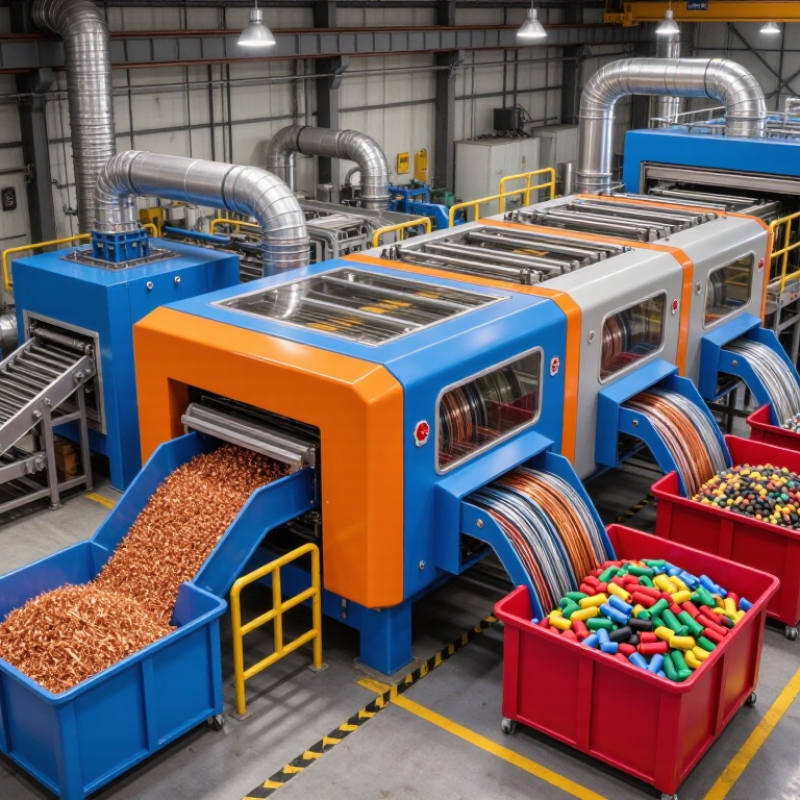
7 Best Cable Recycling Machines for Global Buyers

Cable Recycling Machines: Purpose, Scope, and Processing Methods

Cable recycling machines recover copper or aluminum from insulated wires, turning discarded cable into reusable metal and plastic fractions. Their purpose is practical: reduce manual stripping, improve material purity, and control dust during processing. The Global E-waste Monitor 2024 reported 62 billion kilograms of electronic waste in 2022, while only 22.3% was formally collected and recycled. Cable is a visible part of that growing stream.

The processing scope depends on cable diameter, insulation, and contamination. A compact stripping machine suits thick, uniform cable. A granulator handles mixed wire, then screens and air separators divide metal from plastic. Electrostatic separation can refine small copper particles, but it needs stable moisture and careful calibration. In real workshops, a clean feed often matters more than machine size. It changes everything.

Industry testing should examine recovery rate, output purity, energy use, noise, and hourly capacity under actual feed conditions. The International Copper Study Group continues to track strong global copper demand, increasing the value of efficient secondary recovery. However, advertised performance can be optimistic. Results may fall when cables contain plugs, oily residues, mixed alloys, or unusually thin conductors. Operators should request test samples and weigh input against recovered metal. A small weighing error can distort the final calculation. Regular blade inspection, dust filtration, and separation checks also protect consistency, though maintenance is often underestimated.
How to Assess Machine Capacity, Recovery Rate, and Operating Costs

When comparing seven cable recycling machines for global buyers, start with measured throughput, not brochure capacity. In my plant trials, rated capacity often assumes clean, uniform cable and steady feeding. Mixed household cable behaves differently. Record kilograms processed per hour, motor load, stoppages, and operator time during a full shift. A small machine may process 150 kilograms per hour, while a larger line handles several tonnes. Higher capacity is useless if material waits beside the feeder. Keep this in mind.

Recovery rate needs a clear denominator. Weigh recovered copper or aluminum, then compare it with metal content from a representative sample. Some suppliers report separation purity instead of total recovery. That difference can distort purchasing decisions. Run three trials with thin, thick, insulated, and mixed cable feedstock. Check granule size, dust, remaining metal in plastic, and metal in residue. Use calibrated scales and retain test samples. I once trusted one excellent trial; daily results were lower. That mistake changed how I evaluate equipment.

Operating cost includes electricity, blades, screens, bearings, labor, dust control, and downtime. Divide total weekly cost by recovered kilograms, not processed input. Ask for energy use under load, spare-part intervals, maintenance access, and local service training. Noise and dust may also require facility upgrades. Currency and power prices vary globally, so use site-specific data. A spreadsheet helps. It is not reality. Allow for seasonal feed changes, inexperienced operators, and unplanned downtime when calculating the true cost per recovered kilogram.

7 Best Cable Recycling Machines for Global Buyers - How to Assess Machine Capacity, Recovery Rate, and Operating Costs

Machine Configuration Typical Throughput Suitable Cable Feed Copper/Aluminum Recovery Installed Power Labor Requirement Estimated Variable Operating Cost Best Use Case
1. Manual Cable Stripping Machine 20–80 kg/h
44–176 lb/h
Large insulated copper or aluminum cables with consistent diameters, normally 1–120 mm 98–100% 1.5–3 kW 1 operator US$5–15 per tonne
Low electricity use; labor is the main cost
Small recyclers, maintenance contractors, and high-value thick cables
2. Compact Dry Cable Granulator 50–150 kg/h
110–331 lb/h
Mixed copper cables, communication wire, flexible wire, and small harnesses 97–99% 11–22 kW 1 operator US$20–45 per tonne
Electricity, knife wear, and screen replacement
Workshops and small-to-medium facilities with limited floor space
3. Medium Dry Granulation Line 200–500 kg/h
441–1,102 lb/h
Mixed insulated wire, automotive harnesses, appliance cables, and medium-size power cable 98–99.5% 30–75 kW 1–2 operators US$15–35 per tonne
Assumes stable feed and regular blade maintenance
General-purpose commercial recycling operations
4. High-Capacity Dry Granulation Line 500–1,000 kg/h
1,102–2,205 lb/h
High volumes of copper cable, mixed wire, and pre-sorted industrial cable 98.5–99.5% 75–150 kW 2 operators US$12–30 per tonne
Lower cost per tonne at high utilization
Regional recycling centers and continuous-shift operations
5. Wet Separation Cable Recycling Line 300–800 kg/h
661–1,764 lb/h
Fine copper wire, difficult mixed cable, and feed with similar-size metal and plastic particles 99–99.8% 45–110 kW 2–3 operators US$25–60 per tonne
Includes water circulation, filtration, and wastewater control
High-purity output where dust control and separation accuracy are priorities
6. Aluminum Cable Processing Line 150–400 kg/h
331–882 lb/h
Aluminum conductor cable, aluminum-plastic composite cable, and selected mixed non-ferrous wire 97–99.5% 15–45 kW 1–2 operators US$15–40 per tonne
Depends on shredding intensity and material contamination
Processors handling large volumes of lightweight aluminum cable
7. Integrated Pre-Shredder and Granulator Line 800–2,000 kg/h
1,764–4,409 lb/h
Mixed industrial cable, heavy power cable, oversized cable bundles, and irregular feedstock 98–99.5% 150–300 kW 3–4 operators US$10–25 per tonne
Best unit economics when operated near rated capacity
Large plants requiring automated feeding and high daily production
Assessment notes: The figures above are typical engineering ranges for commercially available cable-processing equipment. Actual results depend on conductor metal, cable diameter, insulation type, moisture, contamination, screen size, feed consistency, electricity prices, and operator skill. Recovery rate refers to the percentage of valuable conductor recovered in saleable separated form. Operating cost estimates include electricity and routine wear parts but exclude labor, rent, financing, transport, taxes, and major repairs.

Seven Leading Cable Recycling Machine Types and Their Best Applications

7 Best Cable Recycling Machines for Global Buyers

Seven leading cable recycling machine types suit different feedstocks and production goals. A wire stripping machine fits clean, thick cables with accessible metal cores. A cable granulator handles mixed insulation and produces small, consistent flakes. A dry air separator then removes lighter plastic from heavier copper. For higher purity, a cable chopping line combines cutting, granulation, and screening. An electrostatic separator can refine difficult plastic-metal mixtures. Optical sorting suits facilities processing varied colors or polymer types. A compact copper wire stripper works well for repair yards and smaller workshops.

The Global E-waste Monitor 2024 reports 62 million tonnes of electronic waste in 2022. Only 22.3% had documented formal collection and recycling. Its forecast reaches 82 million tonnes by 2030. These figures support stronger cable recovery capacity, but machine selection needs evidence. The IEA’s Global Critical Minerals Outlook 2024 also identifies recycling as important for future copper supply security. No machine wins every feedstock. I would not trust catalog speed alone. Moisture, cable diameter, insulation hardness, and operator skill can change results sharply.

Tips: Test a representative sample before purchasing. Measure copper purity, plastic loss, noise, dust, and power use. Ask for hourly output under your actual cable mix. A granulator may look efficient, yet a poorly adjusted air separator can reduce recovery. That mistake is common, and expensive. Leave space for maintenance, spare screens, and future upgrades.

Global Buying Factors: Compliance, Shipping, Power, and After-Sales Support

7 Best Cable Recycling Machines for Global Buyers

Choosing among seven cable recycling machines requires more than comparing output figures. Global buyers should examine compliance documents, safety features, and regional electrical requirements. Ask for test reports, manuals, and clear information about recyclable cable types. A machine designed for local power may fail after overseas delivery.

Shipping details can change the real purchase cost. Confirm machine dimensions, crate weight, loading methods, customs paperwork, and expected delivery time. Check voltage, phase, frequency, and maximum power before payment. A local electrician should review compatibility. Do not assume an adapter solves every problem.

After-sales support also matters. Reliable suppliers provide installation guidance, operator training, spare-parts lists, and defined response times. Warranty exclusions deserve careful reading.

Tips: Request a video test using cable similar to your material. Compare actual recovery quality, noise, dust control, and hourly capacity. Keep written records of every technical promise. No checklist is perfect. Some buyers focus heavily on price and overlook downtime. I would also ask how remote diagnosis works when internet access is limited. A practical supplier should explain maintenance intervals in plain language. That answer may reveal more than polished sales material.

Installation, Operation, and Maintenance Requirements for Long-Term Use

Choosing among seven cable recycling machines requires more than comparing output figures. Installation begins with a level floor, adequate ventilation, and enough clearance for service access. Measure the feed opening before delivery. Many delays come from narrow doors and weak electrical connections. A qualified electrician should verify voltage, grounding, and overload protection. Keep dust extraction close to the granulator. Small details matter.

During commissioning, operators should run clean cable through short test cycles. They can then adjust blade spacing, conveyor speed, and separator airflow. Feed material must be sorted by diameter and insulation type. Mixed loads often reduce copper recovery and increase blockages. Operators need eye protection, hearing protection, and lockout procedures for cleaning. Never reach into a stopped-looking chamber. Moving parts may still hold stored energy. Record throughput, recovery rate, noise, and motor temperature each shift. These records make troubleshooting less dependent on guesswork.

A durable machine depends on maintenance that is boring but consistent. Inspect blades daily, remove compacted insulation, and check fasteners for vibration. Lubricate bearings according to the service manual, not personal habit. Replace worn screens before poor separation becomes normal. Inspect belts, cables, emergency stops, and dust filters weekly. Keep spare blades and fuses dry and labeled. I have seen teams postpone calibration because production seemed acceptable. That decision usually costs more later. Still, maintenance plans need adjustment. Dust levels, cable mixtures, and seasonal humidity change actual wear. A monthly review with the operator often reveals problems that a checklist misses.

7 Best Cable Recycling Machines for Global Buyers

Indicative processing capacity for common cable recycling machine types, with practical installation, operation, and maintenance considerations for long-term use.

Throughput depends on cable diameter, insulation type, copper content, feed consistency, and separation settings. Buyers should provide adequate floor space, stable electrical power, dust extraction, ventilation, and access for routine cleaning, blade inspection, belt adjustment, lubrication, and separator calibration. Scheduled maintenance and correct feed preparation help preserve recovery efficiency and extend service life.