Leave Your Message

Why Choose the Right Cable Stranding Equipment?

Choosing Cable Stranding Equipment is a production decision, not a catalog exercise. The machine affects conductor geometry, line stability, changeover time, and the consistency of each finished cable. A small mismatch can show up as uneven lay, strand damage, or extra setup work. These issues are easy to overlook during a short demonstration.

As an illustrative, fictional cable-process expert, Alex Morgan, puts the principle this way: “The right strander is the one that holds the required lay consistently at your real production speed.” This is an original draft quotation, not a verified statement from a real person. It captures a practical point: evaluate equipment against your own conductor materials, product range, target output, and quality checks.

Look closely at the details. How smoothly does the payoff handle the wire? Can operators maintain stable tension? Are the dies, guides, and take-up suited to the products you actually make? Ask for a trial using representative materials, then inspect the finished strands under normal operating conditions. Small details matter. So does operator feedback.

Price and maximum speed deserve attention, but neither tells the whole story. Maintenance access, spare-parts support, control features, and changeover demands also shape long-term value. Not every line needs the most automated option. That is worth questioning. A careful comparison helps manufacturers choose Cable Stranding Equipment that fits their process today while leaving room for realistic production needs tomorrow.
Why Choose the Right Cable Stranding Equipment?

What Cable Stranding Equipment Does and How It Works

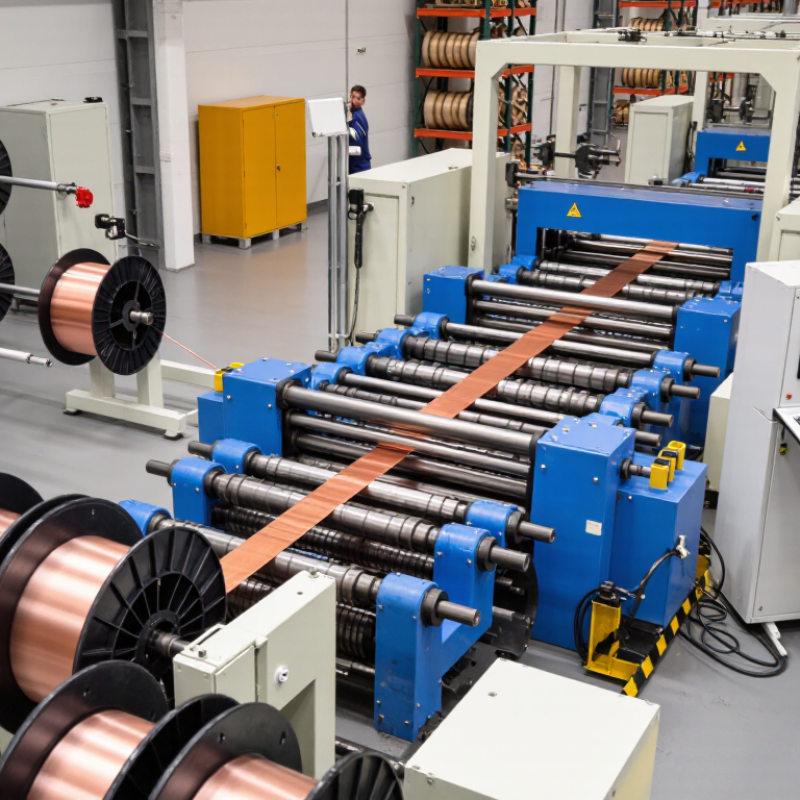
Cable stranding equipment combines individual wires into a flexible, stable conductor. Depending on the cable design, it may strand copper or aluminum wires around a central core. The finished conductor can bend more easily and maintain a consistent shape during later insulation and cabling stages. The machine’s main parts include a payoff system, rotating stranding components, a closing die, and a take-up reel.

During operation, wire pays off from separate reels and travels through guides toward the stranding point. A rotating cage or bobbin system moves the wires around the core in a controlled pattern. The closing die brings them together, while tension controls help prevent slack, breaks, or uneven spacing. The take-up reel collects the completed conductor at a steady speed. That matters. If reel tension changes suddenly, the lay can become irregular, even when the machine appears to be running smoothly.

Operators select settings such as rotation speed, wire tension, and lay length to match the conductor’s size and construction. Sensors and routine checks can reveal vibration, worn guides, or inconsistent wire payoff before defects spread. In practice, setup is rarely perfect on the first run. A short test and close inspection of the strand are useful, because even small changes in wire diameter can affect the finished conductor.
Common Types of Cable Stranding Equipment

Why Choose the Right Cable Stranding Equipment?

Common Types of Cable Stranding Equipment

Cable stranding equipment twists individual wires into conductors with controlled geometry and tension. The common choices include rigid, tubular, planetary, and bunching machines. Each suits different conductor sizes, lay lengths, and production speeds. Small details matter.

A rigid strander handles larger, compact conductors and can support round or sector-shaped constructions. Its rigid cages keep wire positions steady, but setup changes may take time.

Tubular stranders arrange wires inside a rotating tube and are often used for smaller conductors at higher speeds. Planetary machines can strand around a stationary core, useful when the core must not twist. Bunchers gather many fine wires into flexible conductors; they are common in applications requiring repeated bending.

The IEC 60228 standard distinguishes conductor classes, including solid, stranded, and flexible conductors. That classification helps translate product requirements into machine capability.

Demand adds pressure to production planning. The International Energy Agency’s 2023 report, Electricity Grids and Secure Energy Transitions, estimates that 80 million kilometres of grids must be added or refurbished by 2040. That figure is not a machine forecast, but it signals the scale of cable work ahead.

Match equipment to wire diameter, material, conductor class, and target output. A catalog speed can mislead. Trial runs reveal tension variation, birdcaging, and inconsistent lay—issues that may only appear after a longer production shift.

Key Factors for Selecting Stranding Equipment

Why Choose the Right Cable Stranding Equipment?

Key Factors for Selecting Stranding Equipment

Selecting stranding equipment starts with the conductor, not the advertised line speed. Define the material, wire count, finished diameter, lay length, and required flexibility. IEC 60228 distinguishes conductor classes, including class 2 for stranded conductors and classes 5 and 6 for flexible conductors. Equipment must consistently meet the intended construction and tolerance. Small details matter.

Check the full operating range. Can the machine handle both today’s cable sizes and likely future jobs? Review tension control, take-up capacity, changeover time, and access for maintenance. A fast line is not automatically a good line. Uneven tension can cause birdcaging, crossed wires, or inconsistent lay. Run sample production with your actual wire, then inspect the conductor before committing. This step is easy to skip.

Demand is also relevant. The International Energy Agency’s Electricity Grids and Secure Energy Transitions (2023) says annual grid investment needs to rise from about USD 300 billion to over USD 600 billion by 2030. That outlook may support higher cable output, but it does not justify buying excess capacity without a production plan. Compare usable output, downtime assumptions, floor space, and operator requirements. Some figures look neat on paper; real changeovers are messier. A sound choice balances verified product quality with practical throughput.

Why Choose the Right Cable Stranding Equipment? – Key Factors for Selecting Stranding Equipment
Selection Factor What to Specify Example Data or Requirement Why It Matters
Conductor material Material, wire diameter, and applicable tension requirements Copper or aluminum; provide the wire diameter and material grade for each product Material properties affect wire handling, tension settings, breakage risk, and finished-conductor resistance.
Conductor size and construction Nominal cross-sectional area, strand count, and individual wire diameter Examples of common constructions include 7-, 19-, and 37-wire conductors; confirm the exact construction for each size The machine must accommodate the required number of wires and produce the specified conductor geometry.
Conductor class and flexibility Required conductor class and applicable product standard IEC 60228 defines conductor classes, including Class 1 and 2 for solid or stranded conductors and Class 5 and 6 for flexible conductors Class requirements influence wire count, wire diameter, flexibility, and electrical-resistance limits.
Stranding machine configuration Suitable machine type for the product construction and process Compare bunching, tubular, rigid-frame, and planetary configurations against the required conductor design Machine configurations differ in how wires are collected, cabled, and handled; suitability depends on the product and process.
Lay length and direction Required lay length, lay direction, and adjustment range Specify the required lay length and whether the lay is right-hand or left-hand for every product Lay affects conductor stability, flexibility, appearance, and consistency between production runs.
Production speed Required output speed for the intended wire sizes and constructions Request production-speed data for the actual product range; maximum machine speed alone is not a production guarantee Achievable output depends on factors such as wire size, lay length, spool capacity, and the stability of the process.
Tension control Pay-off tension range, adjustment method, and tension consistency Confirm tension settings are suitable for the specified wire material and diameter Uneven tension can lead to loose or distorted strands, wire breaks, and inconsistent conductor quality.
Pay-off and take-up capacity Spool dimensions, maximum load, and winding requirements Provide flange diameter, barrel diameter, traverse width, and loaded spool weight for each production line Spool compatibility affects line operation, changeovers, handling, and the length of material produced per run.
Controls and process monitoring Required speed control, production settings, alarms, and data recording Consider a recipe system for storing product settings and monitoring operating conditions Repeatable settings can simplify changeovers and help operators identify process issues sooner.
Wire-break detection and safety Detection coverage, stopping response, guarding, and operator access Verify wire-break detection for the required wire paths and review applicable workplace safety requirements Prompt detection can reduce scrap and downtime; suitable guarding and safe access protect operators.
Factory space and utilities Machine footprint, maintenance clearance, power, and compressed-air needs Check the installation drawing, electrical supply requirements, and utility connections before purchase Installation constraints can affect machine placement, workflow, maintenance access, and commissioning.
Quality verification Required checks for conductor dimensions and electrical performance Define inspection methods and acceptance criteria in line with the applicable product specification, such as IEC 60228 where relevant Clear verification criteria help confirm that the finished conductor meets its specified construction and performance requirements.
Changeover and maintenance Typical setup tasks, access to wear parts, and maintenance intervals Ask for documented setup procedures and a list of routine inspection and replacement items Practical access and clear procedures can reduce avoidable downtime and support consistent operation.
Selection note: The examples above are general planning guidance, not universal machine specifications. Confirm operating limits, output, spool compatibility, and acceptance criteria against the intended product designs and the equipment supplier’s technical documentation.

How Equipment Choice Affects Cable Quality and Production

Choosing cable stranding equipment affects conductor geometry, electrical performance, and line output. The International Energy Agency’s 2023 report, Electricity Grids and Secure Energy Transitions, says annual grid investment needs to exceed USD 600 billion by 2030, roughly double current levels. That pressure makes stable production more important, but speed alone is a poor target. A fast line that produces inconsistent lay length can create rework, scrap, or conductors that fail dimensional checks.

Pay attention to tension control, cage balance, die alignment, and take-up accuracy. Uneven tension can leave strands loose on one side and compressed on the other. The defect may be hard to spot on a moving line. It can still affect conductor flexibility and finished-cable consistency. IEC 60228 specifies maximum conductor resistance values by conductor size and class, giving manufacturers a measurable electrical benchmark. Equipment cannot guarantee compliance, but repeatable stranding helps operators control variables before testing.

In real production, setup time and operator skill also matter; machine specifications rarely tell the whole story. That is easy to overlook. When comparing lines, review trial-run data for lay-length variation, changeover time, and scrap rate—not just rated speed.

Maintenance and Safety Considerations for Stranding Equipment

Why Choose the Right Cable Stranding Equipment?
Maintenance and Safety Considerations for Stranding Equipment

Reliable stranding depends on routine care, not just machine selection. Before each shift, inspect guards, cable guides, and accessible fasteners for damage or looseness. Listen for new rattling and watch for unusual vibration around the rotating cage. Small changes matter. Clean away dust and grease buildup, but never reach into moving equipment. Before maintenance, isolate the machine and verify it cannot start, following site procedures and the equipment manual. A checklist helps, though it cannot catch every developing fault.

Safety measures should fit the machine and the task. Keep guards in place, wear close-fitting work clothing, and keep hands clear of tensioned wire and rotating parts. Test emergency stops according to the site’s maintenance schedule; never bypass a guard or interlock to keep production moving. Stop work if a cable is misfeeding or a guide looks worn. That pause can feel inconvenient. It is usually cheaper than damaged wire, a longer shutdown, or an injury. Record inspection results and recurring faults, then have trained personnel address repairs. Maintenance intervals vary with speed, materials, and operating hours, so generic schedules are only a starting point.