Leave Your Message

Top Second Hand Cable Equipment Suppliers Worldwide?

The search for the Top Second Hand Cable Equipment Suppliers Worldwide reflects a practical shift toward lower-cost, circular manufacturing. Second-Hand Cable Equipment can reduce capital pressure for cable plants, contractors, and regional recyclers. However, purchase decisions require more than attractive prices. Machine age, production history, refurbishment quality, and spare-part access can change the real cost significantly.

The Global E-waste Monitor 2024 reported 62 million tonnes of electronic waste generated worldwide in 2022. Only 22.3% was formally collected and recycled. This evidence strengthens the case for extending equipment lifecycles, although cable machinery is not measured separately. The International Energy Agency also expects global electricity demand to keep rising through 2026. That outlook may support continuing demand for wires, cables, testing systems, extrusion lines, and recycling equipment. Market forecasts from Grand View Research and related industrial studies offer useful direction, but their categories often combine new and used machinery. Direct comparisons remain imperfect.

Circular-economy researcher Dr. Martin Geissdoerfer describes the circular model as “a regenerative system in which resource input and waste, emissions, and energy leakage are minimised.” His statement applies clearly to equipment reuse, even though he is not a dedicated cable-machinery specialist. That distinction matters. A reliable supplier should provide serial numbers, inspection records, test results, motor condition, and photographs of control panels. Buyers should also verify electrical compatibility and local service capacity. Some listings look complete but lack critical dies, software, or documentation. That can turn a bargain into downtime. This guide evaluates global suppliers through evidence, technical transparency, refurbishment experience, and after-sales support. Data availability is uneven, so every ranking should remain open to review.
Top Second Hand Cable Equipment Suppliers Worldwide?

Define the Market: Copper, Fiber, Testers, and 1–100 Gb/s Network Gear

Top Second Hand Cable Equipment Suppliers Worldwide?

The second-hand cable equipment market is broader than many buyers expect. It includes copper patching tools, fiber splicing accessories, cable certifiers, optical power meters, and network gear from 1 to 100 Gb/s. Reliable suppliers should provide clear photographs, tested serial records, and honest condition reports. A powered test is more useful than a polished listing. I once underestimated a scratched connector panel. It caused unstable readings during a fiber inspection.

Copper equipment needs checks for contact wear, calibration status, and support for current cabling categories. Fiber equipment requires clean ports, accurate loss measurements, and compatible transceiver interfaces. For network devices, verify port speed, firmware access, fan noise, power supplies, and error logs. A 100 Gb/s unit may look impressive, yet older optics can limit practical performance. Regional voltage and shipping conditions also deserve attention. These details are easy to miss.

Tips: Ask for a recent test video, not only static images. Request measured insertion loss for fiber tools and throughput results for network gear. Confirm whether batteries, adapters, licenses, and calibration certificates are included. Compare the quoted price with repair costs and local import requirements. Leave room for uncertainty. Even careful inspections cannot reveal every future failure. The best suppliers explain limitations instead of promising perfect equipment.
Set Supplier Criteria: ISO 9001, Warranty Terms, and Test-Report Coverage

When evaluating second-hand cable equipment suppliers worldwide, ISO 9001 certification is a useful starting point. It shows that documented quality processes exist, but it does not guarantee every refurbished unit performs perfectly. Check the certificate scope, audit validity, and service location. Ask how technicians record calibration, repairs, and final inspections. I would request photographs of serial plates, connectors, cooling fans, and visible wear. Small details often reveal neglected maintenance.

Warranty terms deserve equal attention. Confirm the coverage period, response time, replacement policy, and responsibility for return shipping. A dependable supplier should explain exclusions for batteries, consumable parts, software, and accidental damage. Get these points in writing. “Tested” is too vague. It may mean the unit simply powers on. That is not enough for field use.

Request recent test reports linked to the exact serial number. Reports should identify calibration dates, test instruments, measurement conditions, and acceptable limits. Depending on the equipment, useful evidence may include insertion loss, return loss, optical power, continuity, or OTDR results. Ask whether reports cover every port or only a sample. My checklist is not perfect. A clean PDF can still hide unstable performance under heat or vibration. Before purchase, I would seek a live demonstration or an independent verification period. That extra step may expose faults that paperwork misses.

Verify Copper Stock: Cat 6 at 250 MHz and Cat 6A at 500 MHz

Top Second Hand Cable Equipment Suppliers Worldwide?

Verify Copper Stock: Cat 6 at 250 MHz and Cat 6A at 500 MHz

Buying second-hand cable equipment requires more than checking photographs and asking about operating hours. Ask suppliers for serial records, calibration dates, and clear testing procedures. A polished cabinet can still hide worn connectors or unstable measurement modules. Inspect the ports closely. Scratches, loose adapters, and damaged shielding deserve immediate questions.

For copper stock, confirm that Cat 6 cable is tested to 250 MHz and Cat 6A to 500 MHz. Check conductor material, diameter, resistance, insulation condition, and pair balance. Bare copper should match the declared specification. A handheld resistance test helps, but it cannot replace a full performance test. Request permanent-link or channel results from calibrated equipment. Look for insertion loss, return loss, crosstalk, and length measurements.

Suppliers with technical staff should explain the test setup without vague promises. Ask for recent reports from the exact unit offered, not a similar model. Short video evidence can help, though it is not independent proof. I have seen buyers trust labels too quickly. That habit creates expensive rework later. Frequency claims also need context. A cable may pass a brief check yet fail under repeated testing or installation stress. Leave room for doubt, record every result, and compare copper findings with the supplier’s written specification.

Copper Cable Verification: Cat 6 vs Cat 6A

Cat 6 is specified to 250 MHz and typically supports 1 Gb/s over a 100 m channel, while 10GBASE-T is generally limited to approximately 55 m under standard installation conditions. Cat 6A is specified to 500 MHz and supports 10 Gb/s over a full 100 m channel. Values reflect common structured-cabling specifications referenced by ANSI/TIA-568.2-D and ISO/IEC 11801.

Verify Fiber Stock: OM3 Supports 10 Gb/s over Distances up to 300 m

When evaluating second-hand cable equipment suppliers worldwide, verify the fiber stock before discussing price. OM3 multimode fiber supports 10 Gb/s transmission up to 300 meters with 10GBASE-SR optics, according to IEEE 802.3ae. That distance assumes compliant components, clean connectors, and suitable launch conditions.

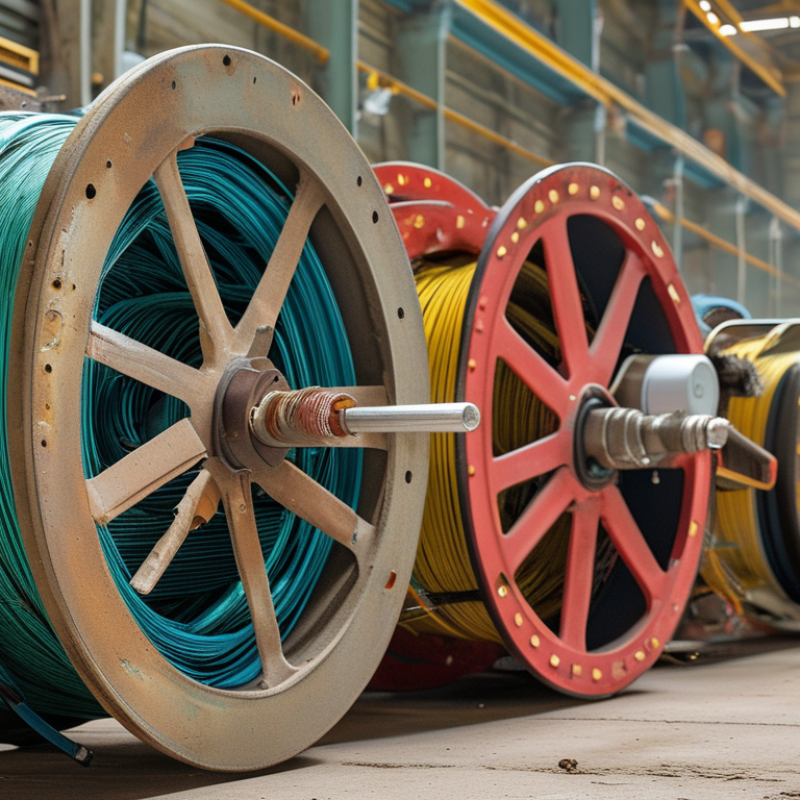
Ask suppliers for reel labels, fiber type, manufacturing dates, and remaining lengths. ISO/IEC 11801-1 identifies OM3 through its laser-optimized multimode performance, not color alone. Turquoise sheathing helps, but it is not proof. Request test results from an optical loss test set and an OTDR. The results should show wavelength readings at 850 nm, connector events, and abnormal attenuation.

Inspect real samples before purchase. Dust hides quickly. End-face scratches can raise insertion loss, even when the cable looks unused. IEC 61280-4-1 provides measurement guidance for installed multimode links, making it useful when reviewing supplier test procedures. A credible supplier should also disclose whether cables were stored in heat, moisture, or tight bends.

The paperwork may be incomplete.

That is a warning, not an automatic rejection. However, undocumented “OM3” stock deserves independent testing before deployment. I would also check polarity, connector type, jacket damage, and bend memory. A low price becomes expensive when a 300-meter link fails at peak traffic. Supplier claims matter less than traceable measurements, clear photos, and a sample that passes your own acceptance test.

Rank Global Vendors by IEC, ISO/IEC 11801, Traceability, and Support

Top Second Hand Cable Equipment Suppliers Worldwide?

Global buyers should rank second-hand cable equipment by evidence, not price. The strongest suppliers provide IEC test reports, serial numbers, and original inspection records. They also map products to ISO/IEC 11801 channel and permanent-link requirements. Equipment for field testing should reference IEC 61935-1 or ISO/IEC 14763-3 methods. A clean case is helpful. A calibrated tester matters more.

The highest-ranked suppliers maintain chain-of-custody records from collection to resale. Look for reel numbers, connector batch details, test dates, and calibration certificates. The ISO Survey 2023 recorded more than one million ISO 9001 certificates worldwide, showing how widely quality systems are used. Certification alone proves little, however. Verify the certificate scope, issuing body, and equipment-specific records. Suppliers with regional technicians usually outperform distant sellers when replacement parts or software updates are needed.

Tips: Ask for a sample test report before payment. Confirm firmware compatibility. Check optical-loss results at the correct wavelengths. For copper systems, request permanent-link data, not only basic continuity checks. Small details expose weak suppliers. I would also inspect returned equipment carefully; some listings describe “tested” units without stating the test standard. That wording is convenient, but not reliable. Record every serial number during receiving inspection, even when the supplier appears experienced.